Mall kiosk fit out Dubai: approval and sequencing guide
A mall kiosk is approved in a fixed order: the mall's design review first, then the Dubai Municipality permit, then the landlord NOC that gets you onto site. Follow that sequence and a small unit goes from manual sign-off to handover in about seven weeks. Get it out of order and you redraw a kiosk that was already buildable.
Who approves a kiosk, and why the order matters
Three parties have a say, and they do not talk to each other unless you make them.
The mall's design review comes first. The landlord's consultant checks your drawings against the design manual and issues comments. Nothing gets built on a comment. Mall kiosk design approval in Dubai runs on the landlord's clock, and that clock starts when your submission is complete, not when you send an email asking about it.
The municipality fit out permit comes second, because the drawings you submit must match what the mall approved. Submit to the municipality first and every mall comment becomes a resubmission. That is where most of the lost weeks come from. It is the same authority chain set out in our commercial fit out permit approval map, with one extra layer sitting on top: the landlord.
The landlord NOC is third but book it in week one. It controls site access, delivery windows, insurance and worker gate passes, and malls issue those in batches.
Read the mall's design manual before anyone draws
No two manuals are the same. They fix maximum height so sightlines stay open, permitted signage and whether it can be lit, which finishes and fire-rated boards are allowed, and the counter height and branding zone you must build to. A kiosk is the smallest unit in a retail fit out in Dubai programme and also the most rule-bound per square metre.
Storage is where most first drafts fail. Many malls refuse stock above the counter line or behind an open back, so the unit has to hold a day's trade in closed drawers and nothing else. That single line changes your joinery more than any finish choice does.
Before drawing, write a compliance schedule: one line per manual rule, the answer, and where it appears in the drawing. The client signs it. It is the cheapest document in the job.
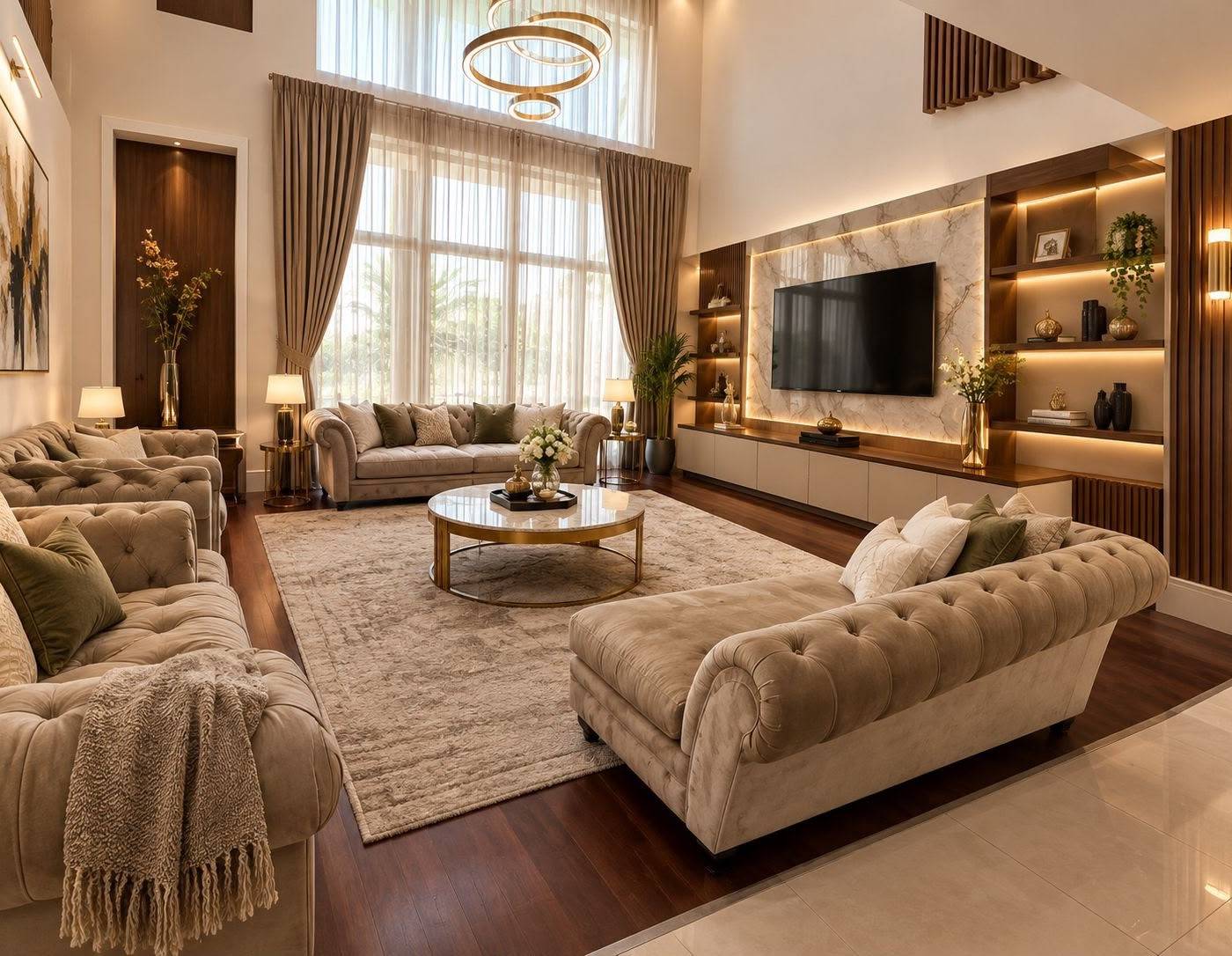 Finish at close range: fluted wood, stone and backlit light. A kiosk gets judged from a metre away.
MEP tie-in, fabrication and the mall's working hours
The floor box sets the layout, not the other way round. The mall allocates power at a fixed tie-in point, and moving it is a mall works order with a price and a date you do not control. Ask any kiosk fit out contractor in Dubai for the tie-in location, the load in kW, and the water and waste positions before design starts.
Fabrication choices decide how a retail kiosk build in Dubai meets the mall's working hours. Most concourses restrict cutting, dust and noise during trading, so the unit is built as modules in the workshop and assembled overnight. Four pieces over three nights costs less in access charges than two weeks of on-site joinery, and it leaves a cleaner site behind.
The site was clean when they left. We needed them fast on a running job. They finished the renovation on time. Good work from start to end. Davranbek Tashbayev, 5 stars
That is the pattern behind our Google rating of 5 from 4 reviews.
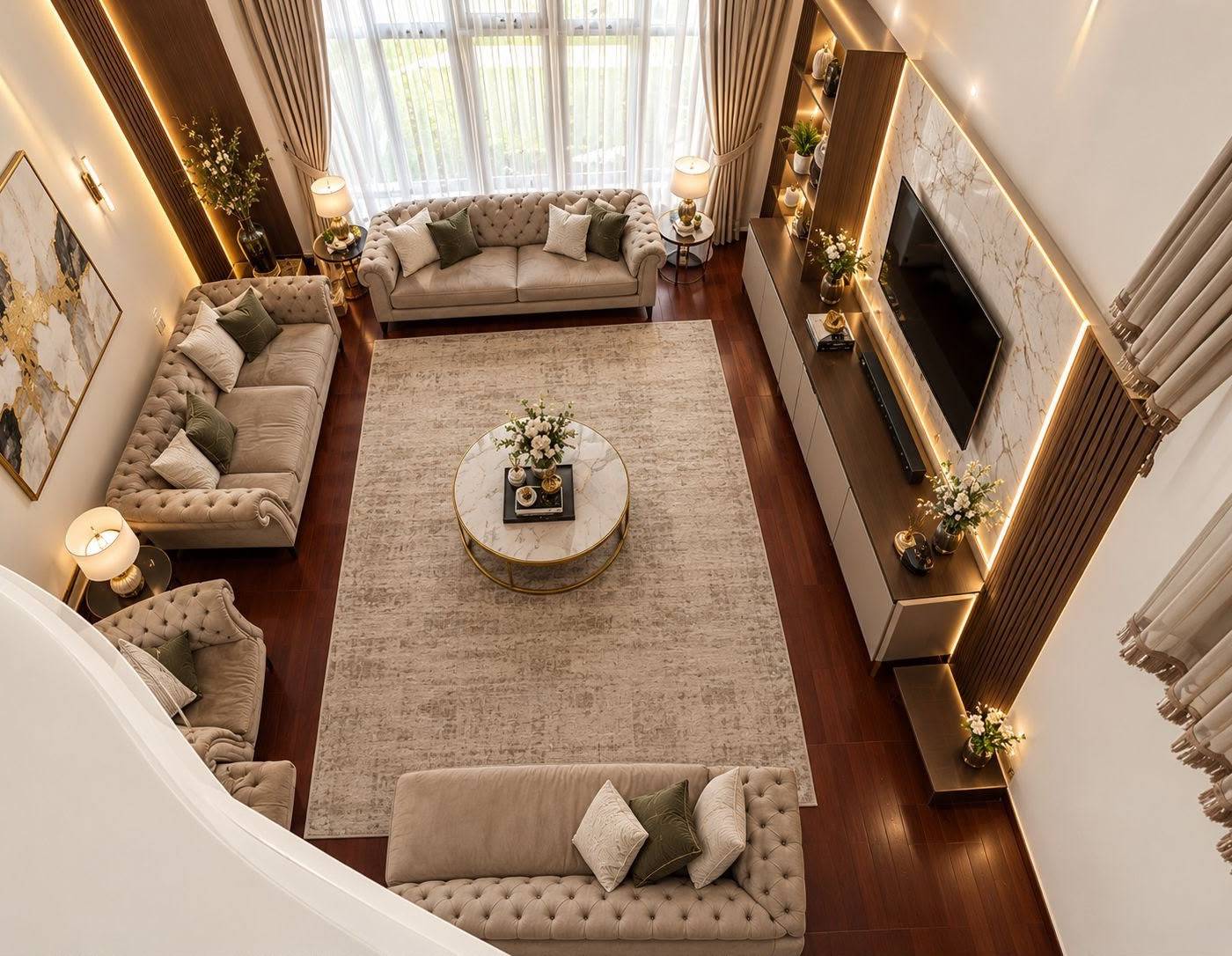 Closed, divided storage: how a small footprint holds a day of stock and still passes the storage rule.
F&B kiosks: extraction and grease with no back of house
An F&B kiosk in Dubai is a different approval animal. Cooking means extraction, and extraction means a route to a landlord-approved discharge point. Sometimes that is a shared riser. Sometimes there is no route at all and the unit is licensed for warming and assembly only. That answer arrives before you order equipment, never after.
Grease trap, handwash sink and waste holding all have to fit inside the footprint. Water and drainage decide where the sink goes, the sink decides the counter run, and the counter run decides the customer queue. The food safety side runs deeper in our café fit out in Dubai guide.
What a fair quote itemises, and how the programme runs
A kiosk quote should read as line items, not a lump sum:
- Design manual compliance drawings and the mall submission.
- Municipality permit, consultant and inspection fees.
- Fabrication, counter, joinery and finishes, with fire-rated boards named.
- MEP connection, testing and commissioning at the tie-in point.
- Signage and illumination inside the approved zone.
- Freight, hoisting and after-hours access charges.
- Site protection and daily cleaning while you hold the unit.
- Reinstatement scope, and the bond or reserve held back for it.
There is no rate per square metre here, because a kiosk is not priced by area. Two units of the same size can differ by the cost of a grease trap or a three-phase upgrade.
The programme: week one, manual review and compliance schedule. Week two, design and shop drawings. Week three, mall review. Week four, municipality submission. Weeks five to seven, fabrication. Then three to six nights on site for install, commissioning and the final inspection. Monde runs these jobs with an in-house workforce of 50 plus specialists under its own licence, and a project manager stays on the file from manual review to handover.
To get a number for your unit, send the mall name and unit number, the floor plan with the tie-in point marked, photos of the unit and the floor box, the width and height you have been given, and whether you will sell food or drinks. WhatsApp those to +971 54 494 1092, that is the fastest route, or talk to Monde about a kiosk fit out.
Frequently asked questions
How long does mall kiosk approval take?
On a straightforward unit, plan three to four weeks from a complete submission to approved drawings, split between the mall's review and the municipality permit. Malls that batch their design reviews add about a week. The date that slips is usually not the authority, it is a missing NOC document or a drawing set that does not match the manual.
Can I reuse an existing kiosk structure?
Sometimes, if the frame is sound and the landlord allows it. What usually has to change is the finishes, signage, counter and any MEP that does not suit your brand or your load. Ask the previous tenant or the mall for the as-built drawings and the reinstatement condition before you agree a price on a used structure.
Do I need Civil Defence approval for a coffee kiosk?
It depends on what you actually cook. Coffee service and warming sit at one end, frying, gas and heavy extraction at the other, and the submission changes with them. Get the cooking method confirmed in writing with the landlord before design review closes, because it decides your extraction route and your equipment list.
Who pays for reinstatement at the end of the lease?
The tenant, in almost every mall lease, and it is normally secured by a bond or guarantee taken at handover. The cheapest reinstatement is designed in at the start, with modular units that come out in the same pieces they went in. Read that clause before you sign off the kiosk design, not when the lease is ending.